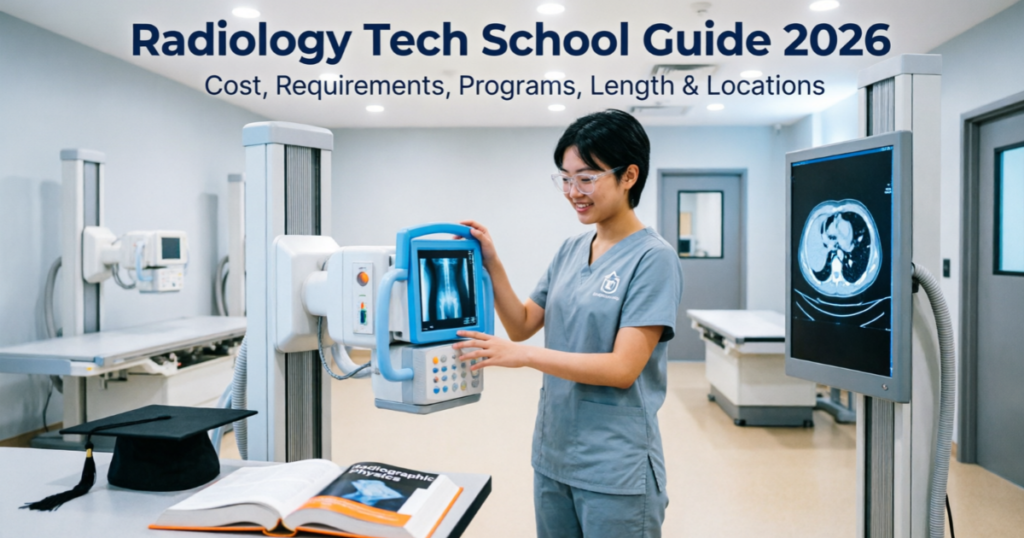

Choosing the right radiology tech school can feel confusing when you’re comparing programs, costs, and requirements. You may be unsure about a radiologic technology program, radiography school, or medical imaging program. Understanding radiology classes, clinical training, radiologic science, and radiology certification can make your decision much easier.
This guide explains online radiology tech school options, program length, costs, and admission requirements. You’ll also learn about radiologic technologist programs, X-ray tech schools, ARRT certification, radiology tech clinicals, radiation protection, and career paths. Whether you’re searching for a radiology school near me or wondering how to become a radiology tech, you’ll find practical information here.
Radiology Tech School Online
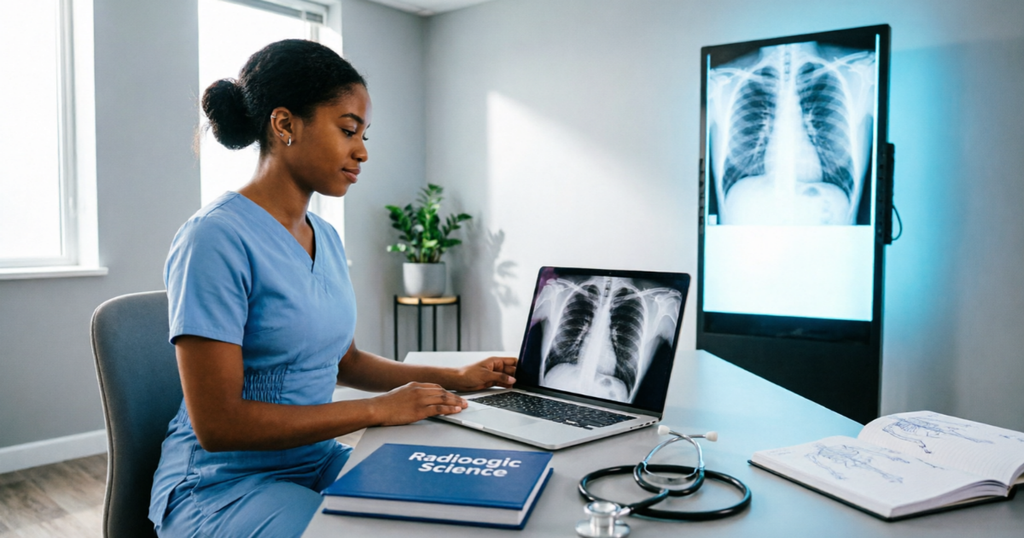
An online Radiography school l can offer flexibility for students with busy schedules. You may complete general education and theory courses online. However, radiography programs usually include hands-on labs and clinical training. These parts may require you to attend an approved location and work with patients under supervision.
Before choosing a program, check its accreditation and clinical requirements. Look for courses covering anatomy and physiology, patient care, radiographic positioning, and radiation safety. Some schools offer hybrid options that combine online classes with in-person clinical experience. This can make training easier to manage.
Radiology Tech School Length
Radiography school length depends on the program and degree you choose. An associate degree usually takes about two years of full-time study. A bachelor’s degree often takes around four years. Training may include classroom lessons, laboratory work, and supervised clinical practice. Your schedule can also change if you need prerequisite courses before starting professional classes.
Some students may choose certificate programs when schools offer them. These programs can have different timelines based on their curriculum and clinical requirements. Before enrolling, review the course schedule and graduation requirements carefully. Ask the school how long students typically take to finish. This helps you plan your education, finances, and future career goals.
Read More:Allhere Job com: Complete Guide to Online Jobs and Career Opportunities
Radiology Tech School Cost
Radiography school cost can vary widely by school, location, and program type. Community colleges often have lower tuition than private schools. You may also pay for books, uniforms, lab fees, exams, and clinical supplies. In-state students may receive lower tuition rates than out-of-state students at public colleges.
Before enrolling, ask for a complete cost breakdown. Check tuition, fees, financial aid, and payment plans. Some programs offer scholarships or grants for eligible students. You should also budget for transportation and other clinical expenses. Comparing total costs can help you choose a program that fits your budget.
Radiology Tech School Requirements
Starting a career in medical imaging takes more than an interest in X-rays. You’ll need to meet school requirements and prepare for hands-on training. Most programs look at your education, prerequisite courses, and readiness for patient care. Knowing these steps early can help you avoid delays and choose a program that fits your goals.
High School Education
A high school diploma or GED is usually the starting point for admission. Many programs also look for courses such as biology, chemistry, algebra, or physics. Strong grades can help when admission is competitive. Think of these classes as building blocks. They prepare you for anatomy, imaging technology, and other technical subjects later in the program.
Prerequisite Courses
Some programs require college prerequisites before professional radiography courses begin. Common subjects include anatomy and physiology, medical terminology, mathematics, and basic science. Schools may require minimum grades in these classes. Completing them early can make the main program easier to manage. It also helps you understand the science behind positioning patients and producing clear diagnostic images.
Health and Background Checks
Clinical training often involves direct contact with patients. For this reason, schools may require health screenings, immunization records, drug testing, or background checks. Requirements vary by institution and clinical site. You may also need basic CPR certification. Completing these steps before clinical placement can prevent unexpected delays and help you enter training prepared.
Entrance Requirements
Some radiography programs use entrance exams, interviews, or placement tests. Others may consider your previous grades and completed prerequisites. Competitive programs can have limited seats, so meeting the minimum requirements doesn’t always guarantee admission. Check the application carefully and submit every required document on time. A missing transcript or test result could delay your start date.
Clinical Training Requirements
Classroom knowledge is only part of becoming a radiologic technologist. Students also complete supervised clinical training where they practice patient care, positioning, image evaluation, and radiation protection. Clinical sites may have additional rules that students must follow. This experience helps connect lessons with real situations and builds confidence before entering professional radiology technology work.
Radiology Tech School Las Vegas
If you’re looking for a Radiography school in Las Vegas, compare programs carefully before applying. Check the program length, tuition, admission requirements, and clinical training options. Some schools may offer radiography programs through colleges or career institutions. Make sure the program prepares you for certification and provides enough hands-on experience with medical imaging equipment.
Las Vegas students should also review accreditation and clinical placement details. Ask whether the program includes anatomy, patient care, radiographic positioning, and radiation safety. Clinical experience is especially important because you’ll work with real patients. Comparing several local programs can help you find an option that matches your schedule, budget, and career goals.
Radiology Tech School NYC
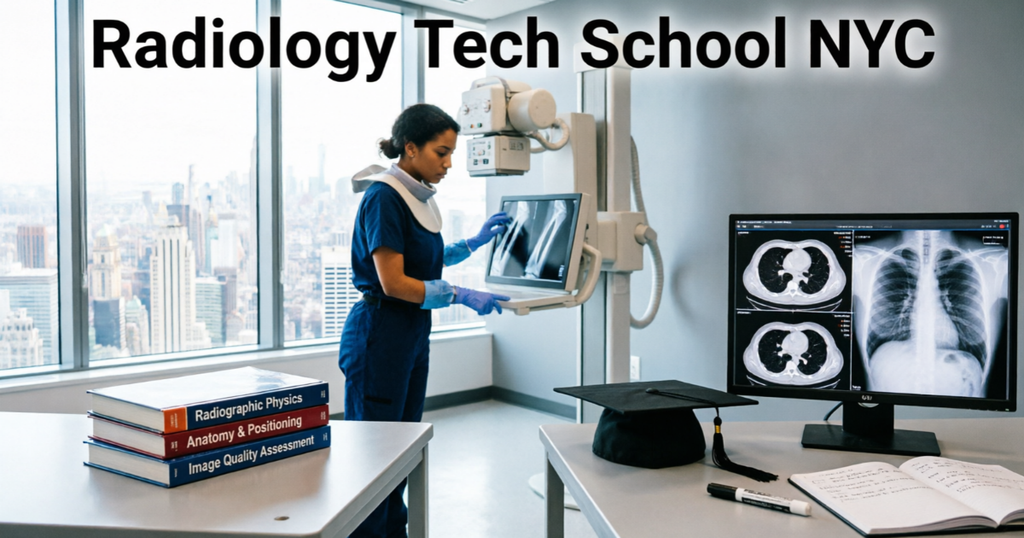
different costs and requirements. Compare program length, tuition, accreditation, and clinical training before applying. Some schools offer radiography programs through colleges or healthcare institutions. Check the curriculum to ensure it covers patient care, anatomy, imaging technology, and radiation safety.
NYC students should also ask about clinical placements and certification preparation. Hands-on training helps you build confidence before working with patients. Review admission requirements carefully, including prerequisite courses and health documents. Comparing several programs can help you find a suitable option based on your education goals, schedule, budget, and preferred learning environment.
Radiology Tech School Arizona
Choosing a Radiography school in Arizona starts with comparing the program details. Look at tuition, program length, admission requirements, and accreditation. Many programs include classroom study, laboratory practice, and clinical training. You’ll likely study anatomy, patient care, radiographic positioning, and radiation safety. These subjects prepare you for real healthcare settings and future certification.
Arizona students should also check clinical placement options before enrolling. Hands-on experience helps you understand how imaging equipment works with real patients. Ask about certification preparation and graduation requirements too. Comparing several schools can help you find a program that matches your schedule, budget, education goals, and preferred learning environment.
Radiology Tech School NJ
Choosing a Radiography school in New Jersey requires careful planning. Start by comparing tuition, program length, admission requirements, and accreditation. Most programs combine classroom lessons with laboratory work and clinical training. You may study anatomy, patient care, radiographic positioning, imaging technology, and radiation safety. These subjects build the skills needed for professional healthcare settings.
NJ students should also check clinical placement and certification preparation. Hands-on training gives you experience working with patients and imaging equipment. Review prerequisite courses and application deadlines before applying. Comparing several programs can help you choose one that fits your schedule, budget, education goals, and future career plans.
How Long Is Radiology Tech School?
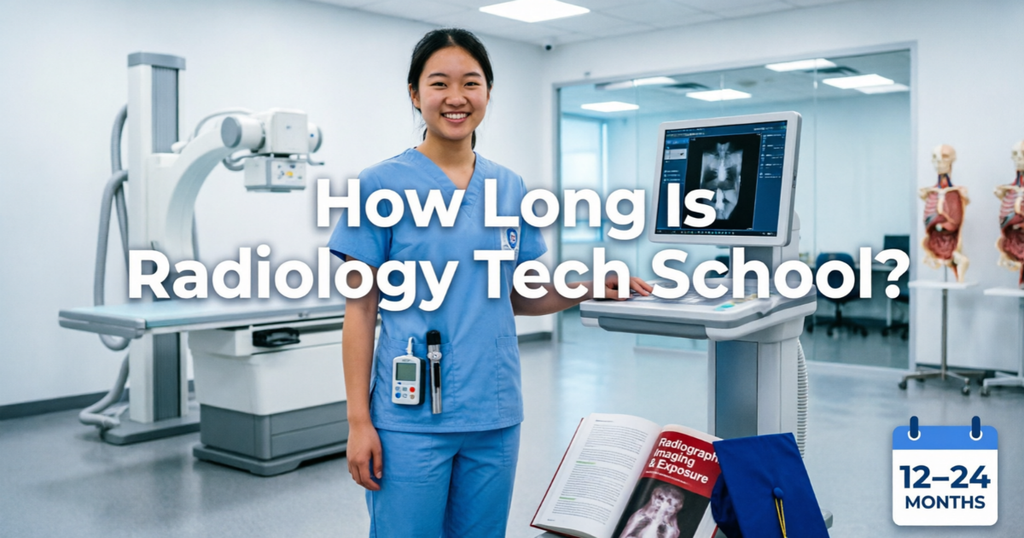
Most students complete an associate degree program in about two years. This route combines classroom lessons, laboratory practice, and supervised clinical training. You’ll study subjects like anatomy, patient care, imaging procedures, and radiation safety. The exact timeline can vary by school, course load, and program structure.
A bachelor’s degree usually takes around four years. It may include deeper coursework and broader healthcare education. Some students choose certificate programs that take less time. However, available options and requirements vary by school and location.
Your total timeline may also include prerequisite courses. Clinical requirements can add important hands-on experience before graduation. Before applying, check the school’s curriculum and completion schedule. This helps you understand the real time commitment and plan your education with fewer surprises.
How Hard Is Radiology Tech School?
Radiography school can be challenging but manageable with steady effort. You’ll study subjects like anatomy, physiology, patient care, and imaging procedures. Some topics may feel difficult at first. Regular study and practice can help you understand the material and build confidence.
Clinical training adds another level of learning. You’ll practice positioning patients, operating imaging equipment, and following radiation safety rules. You must stay focused because small mistakes can affect image quality. Good communication also matters when helping patients feel comfortable.
Time management can make a big difference. Create a study routine and ask questions when something feels unclear. Hands-on practice becomes easier with experience. If you stay organized and keep practicing, you can handle the workload and prepare for a career in medical imaging.
Is Radiology Tech School Harder Than Nursing School
Radiology tech and nursing programs can both be demanding. They cover different subjects and prepare students for different roles. Radiology training focuses on imaging, equipment, positioning, and radiation safety. Nursing education covers patient care, medications, clinical assessment, and broader healthcare responsibilities.
The difficulty can depend on your strengths and learning style. Students who enjoy technology and anatomy may prefer imaging coursework. Others may feel more comfortable with nursing subjects and direct patient care. Both paths require study time, clinical practice, and strong attention to detail.
Program length and requirements also vary by school. Instead of asking which path is harder, compare the coursework, clinical hours, and daily responsibilities. Consider your interests and career goals. This can help you choose a healthcare program that suits your skills and preferred work environment.
Read More:RedeepSeek Com: Explore AI Tools, Features, Benefits, and How It Works
Interventional Radiology Tech School
Interventional Radiography school teaches students how to assist doctors during image-guided medical procedures. Students learn about human anatomy, patient care, medical imaging, radiation safety, and basic equipment operation. They also study how to prepare patients before procedures. These skills help students work safely and confidently in hospitals, imaging centers, and other healthcare settings.
Students also receive practical training during their education. They learn sterile techniques, proper patient positioning, and safe handling of imaging equipment. Clinical practice allows them to work with healthcare professionals and real patients. This experience helps them understand daily responsibilities and improve their technical skills before entering the healthcare workforce after completing their training.
The length of an interventional radiology program can vary by school and location. Some students first complete a radiologic technology program before receiving specialized training. Certification and licensing requirements may also differ by state or country. Students should check local requirements and choose an accredited program that provides suitable classroom learning and clinical experience.
Can You Do Radiology Tech School Online
Yes, some radiology tech programs offer online coursework for students who need flexible learning options. Classes may cover anatomy, medical terminology, patient care, radiation safety, and imaging principles. However, radiologic technology is a hands-on career. Students must learn how to position patients, operate imaging equipment, and follow safety procedures during clinical training.
Online learning can make school easier to manage around work or family responsibilities. However, students usually need in-person clinical training at an approved healthcare facility. Before choosing a program, check its accreditation and local licensing requirements. Make sure the program provides enough hands-on experience to prepare you for your future radiology tech career.
How Much Does Radiology Tech School Cost
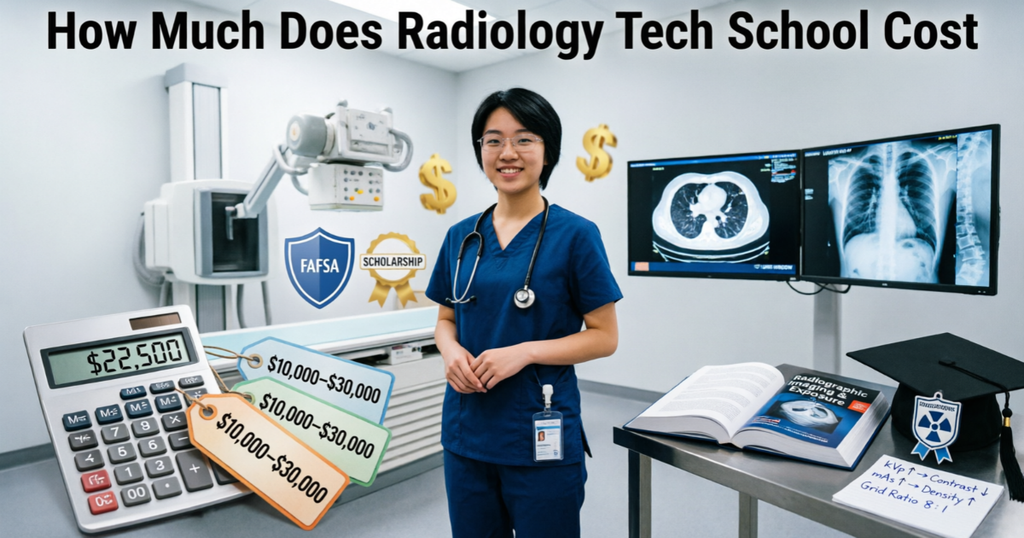
Radiography school costs depend on the school, program length, and location. Community colleges often have lower tuition than private schools. Students may also pay for books, uniforms, equipment, supplies, and clinical fees. These extra expenses can increase the total cost. Financial aid, scholarships, and payment plans may help make education more affordable for many students.
Before choosing a program, compare the complete cost instead of looking at tuition alone. Ask about registration fees, laboratory costs, certification exams, and clinical expenses. Program length can also affect your total spending. Check the school’s current tuition rates and financial aid options. This helps you create a realistic budget before starting your radiology tech education.
How Many Years Is Radiology Tech School
Radiography school usually takes about two years for an associate degree program. Students learn subjects like anatomy, patient care, radiation safety, and medical imaging. They also complete hands-on clinical training. The exact length can vary by school and program. Certificate programs may take less time while bachelor’s programs can require more years to complete.
During clinical training, students practice working with patients and imaging equipment under supervision. This experience helps build important technical and communication skills. After graduation, students may need certification or licensing before working as radiologic technologists. Requirements depend on the state or country where they plan to work and the specific career path they choose.
Frequently Asked Questions
How long does radiology tech school take?
Radiography school usually takes about two years for an associate degree. Program length can vary based on the school, schedule, and clinical requirements.
Is radiology tech school difficult?
Radiography school can be challenging because students study anatomy, imaging, patient care, and radiation safety while completing hands-on clinical training.
Can you attend Radiography school online?
Some Radiography school courses may be available online. However, students usually need in-person clinical training to develop practical imaging and patient care skills.
How much does Radiography school cost?
Radiography school costs vary by location, school, and program type. Students should also budget for books, supplies, clinical fees, and certification expenses.
Can I work while attending Radiography school ?
Working while attending Radiography school may be possible with a flexible schedule. However, clinical training and coursework can require significant time and regular attendance.
Do you need college for Radiography school ?
ManyRadiography school l programs require students to complete prerequisite courses before admission. Requirements vary, so check the specific school before applying.
What do you learn in Radiography school ?
Radiography school covers anatomy, patient positioning, medical imaging, radiation protection, equipment operation, and clinical procedures to prepare students for professional healthcare work.
Does Radiography school include clinical training?
Yes, Radiography school typically includes supervised clinical training. Students practice imaging procedures, patient communication, safety techniques, and equipment use in healthcare settings.
Can you become a radiology tech in two years?
Many students can complete Radiography school l in about two years through an associate degree program. Clinical requirements and graduation timelines may vary.
Is Radiography school worth it?
Radiography school can provide specialized healthcare training and practical experience. Students should consider program costs, career goals, licensing requirements, and local job opportunities.
Conclusion
Choosing radiology tech school can be a useful step toward a career in medical imaging. Students learn anatomy, patient care, radiation safety, and imaging skills. Radiography school also provides hands-on clinical training. Program length and costs can vary by school and location. Some programs may offer flexible learning options for busy students.
Before choosing radiology tech school, check the admission rules, total costs, accreditation, and clinical training. Make sure the program meets the licensing requirements in your area. Good preparation can make Radiography school easier to manage. Take time to compare different programs and understand their requirements. With proper training, students can build useful skills for working with patients and healthcare teams.